Hi, we use cookies!
Our website uses cookies to improve your experience. By continuing, we assume your permission to deploy cookies as detailed in our Cookie Policy.

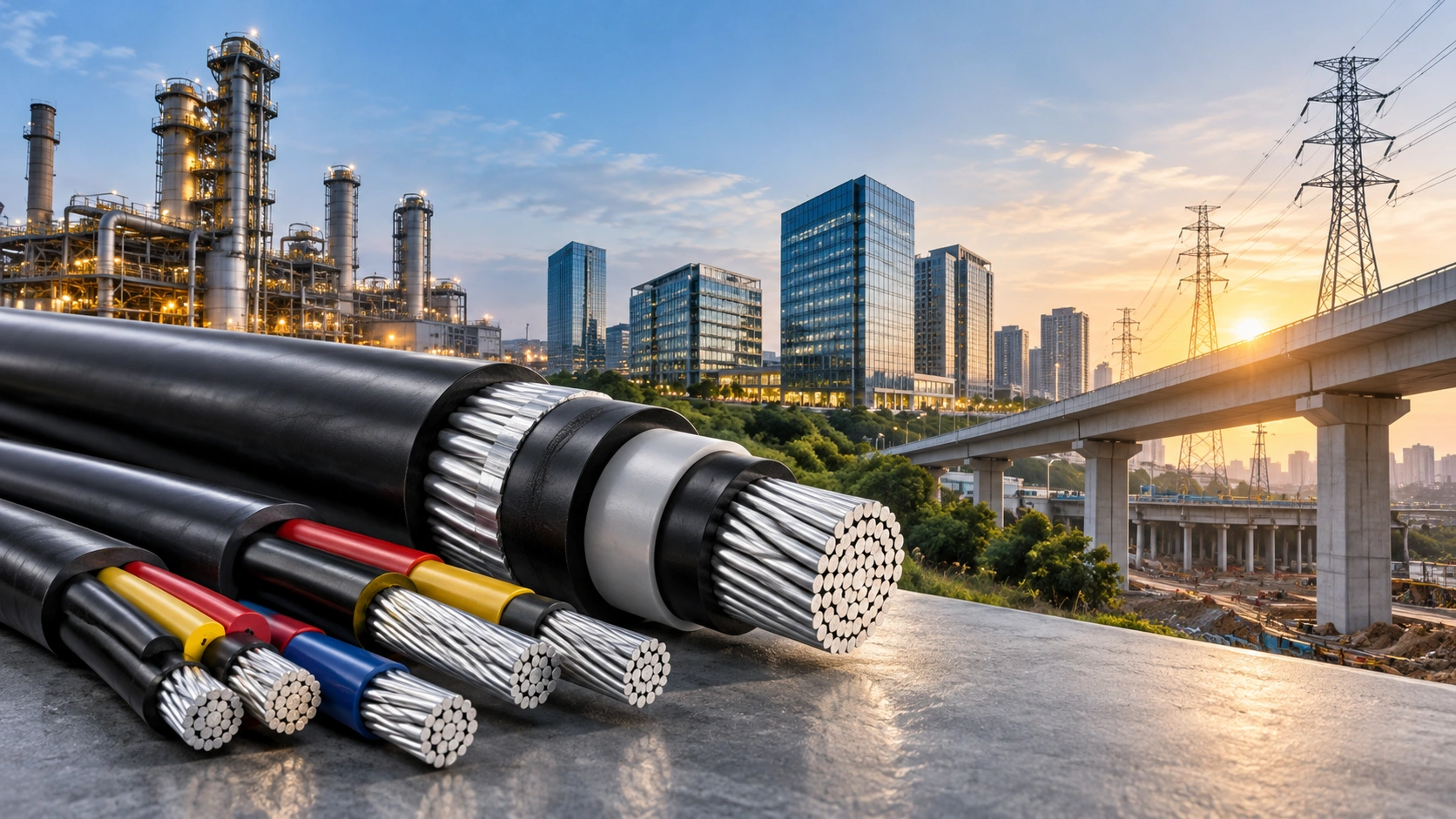
India's power and infrastructure sector is moving fast. Power distribution networks are expanding, industrial capacity is growing, commercial construction is picking up pace, and renewable energy — especially solar — is scaling at a rate few predicted a decade ago. All of this is pushing up demand for cables that actually fit the job they're being installed for, not just cables that technically carry current.
For contractors, EPC companies, utility engineers, and infrastructure developers, successful execution starts with partnering with a dependable electrical cable manufacturer in India.
Based in Rajkot, Gujarat, Flashcab Cables Private Limited manufactures an end-to-end range of precision-engineered cables built for every critical tier of India's electrical ecosystem: Medium Voltage Covered Conductors, LT Armoured Power Cables, LT AB Cables, Industrial Flexible Cables, Building Wires, Earthing Cables, and Solar Cables.
A cable's primary duty is to transmit electric power safely and efficiently from source to load. However, "safely" depends entirely on whether the cable was specifically engineered for the operational and environmental conditions it encounters during service. Not every cable belongs on every project.
Getting cable selection right requires a comprehensive assessment of:
Get the calculation wrong, and you risk severe overheating, line loss, dielectric breakdown, unexpected tripping, premature failures, and costly downtime. Get it right, and the entire electrical system operates reliably, safely, and economically for decades without drama.
This is where every technical selection begins. The cable must handle the actual design load under actual site conditions — not merely the theoretical load on an architectural drawing. An industrial motor feeder, a commercial lighting circuit, a municipal water distribution plant, and a utility-scale solar PV string have wildly divergent current profiles and surge behaviors, even though all technically "carry power."
Electrolytic grade copper and electrical-grade (EC) aluminium dominate the Indian market. The choice between them balances electrical conductivity, mechanical flexibility, tensile strength, cable weight, diameter, and lifecycle project economics:
The insulation system is what keeps a cable operational against ambient hazards: sustained heat, water submersion, industrial chemicals, transformer oil, sunlight ultraviolet (UV) radiation, and mechanical abrasions. For heavy industrial plants and coastal infrastructure, standard PVC may not suffice; Cross-Linked Polyethylene (XLPE) or High-Density Polyethylene (HDPE) jackets provide dramatically higher dielectric strength and thermal headroom (up to 90°C continuous operation and 250°C under short-circuit conditions).
A building wire nestled inside a dry wall conduit operates in a totally different world compared to an armoured cable buried directly in moist soil, a covered conductor strung along a wind-swept forest corridor, or a solar DC cable baking under 48°C desert sun. Knowing exact installation conditions dictates whether you need mechanical steel armouring, UV stabilization, anti-tracking jackets, or water-blocked conductor strands before issuing a purchase order.
A key advantage of partnering with an integrated cable manufacturing company like Flashcab is access to a complete, certified portfolio under one roof — streamlining EPC procurement and technical verification.
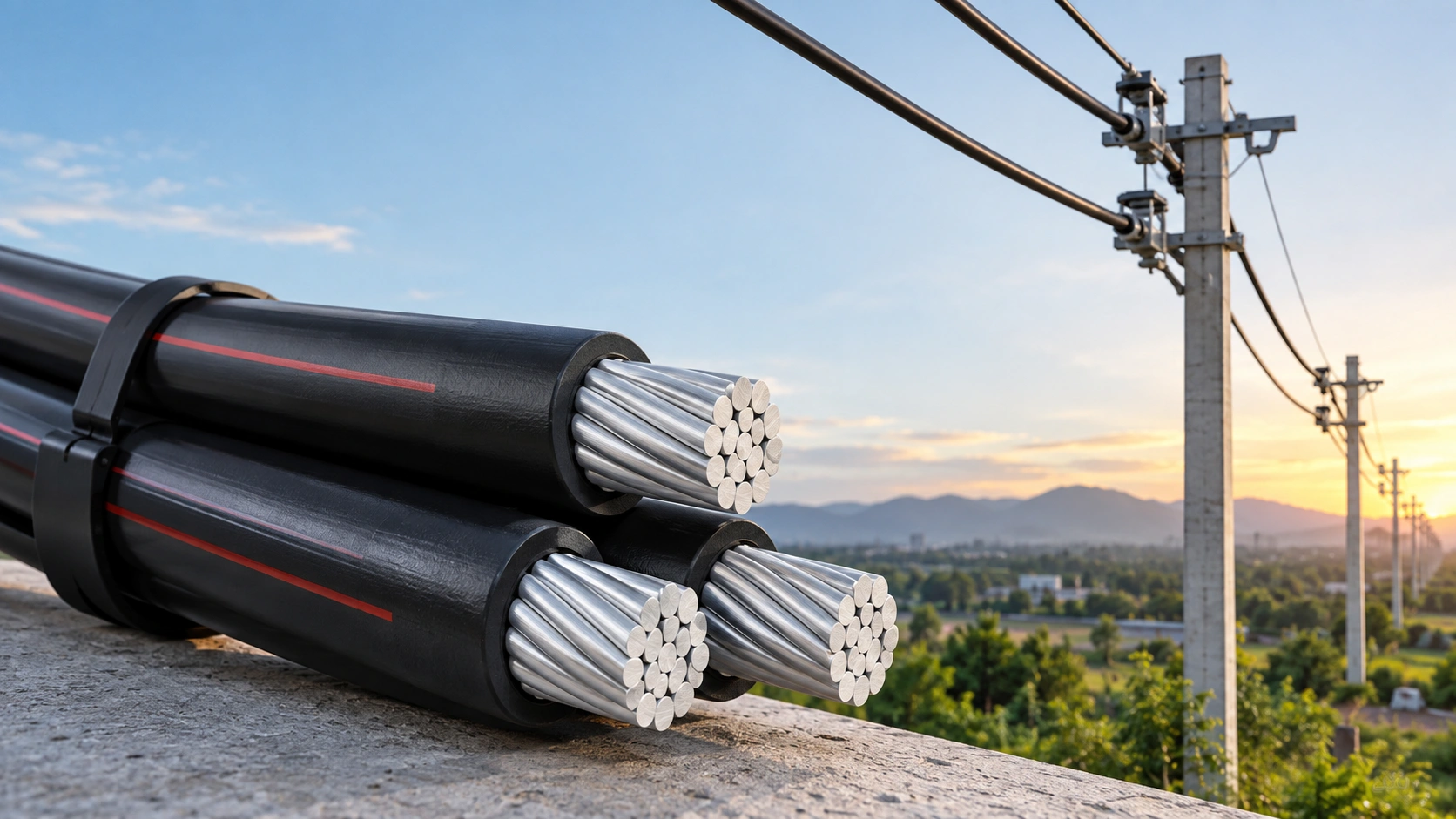
Medium Voltage Covered Conductors (11kV to 33kV) are designed for overhead distribution networks where conventional bare conductors pose severe outage and safety risks. Built with stranded longitudinal watertight aluminium alloy (AAAC/AL-59) conductors, an inner extruded semi-conducting screen, an inner XLPE layer, and a robust outer high-density anti-tracking, UV-protected HDPE sheath.
Primary Applications: Forest corridors and wildlife sanctuaries (preventing animal electrocution), dense urban/semi-urban corridors with narrow right-of-way, coastal areas, and tree-lined overhead utility distribution networks.
Complementary System: MVCC Accessories — Flashcab engineers dedicated Tension/Dead End Clamps, Suspension Clamps, and Insulation Piercing Connectors (IPC) designed as a unified system.
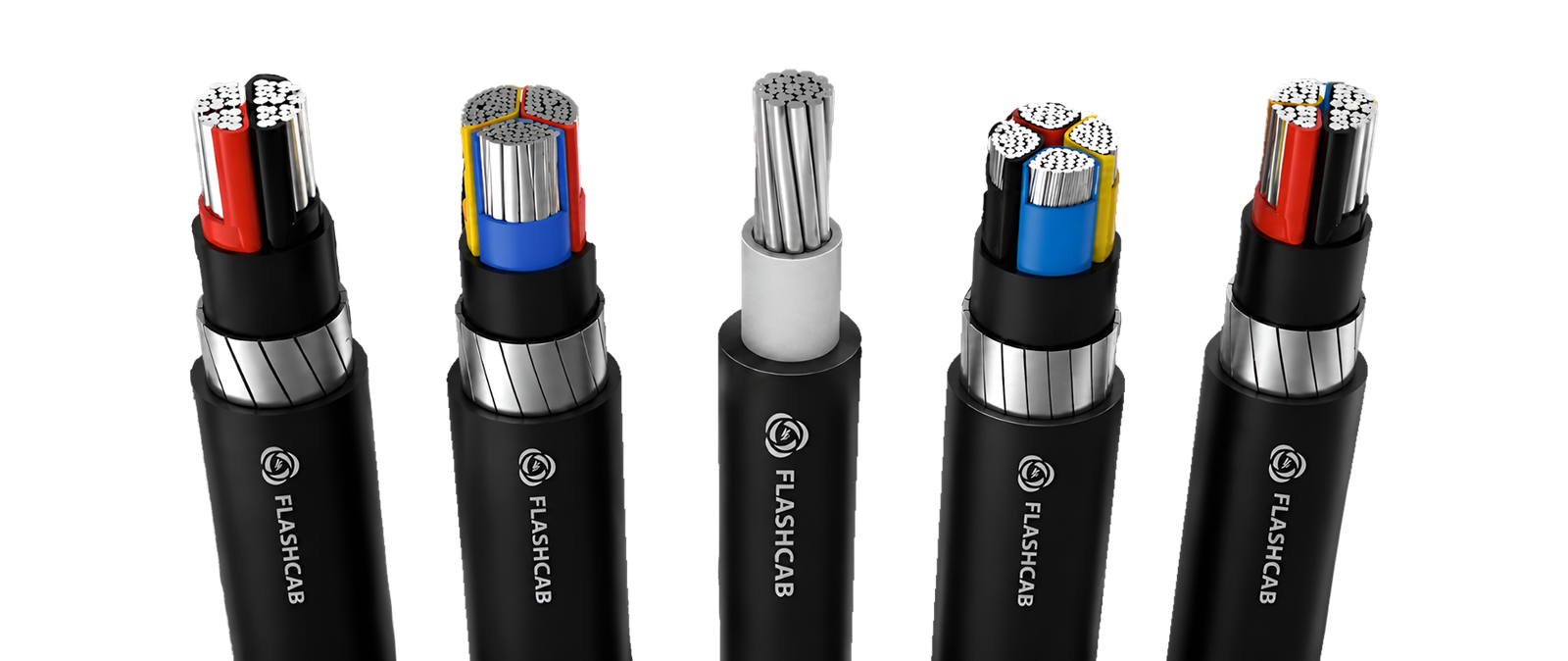
LT Armoured Cables are the workhorse of industrial and commercial power distribution where cables encounter mechanical impact, ground pressure, or direct burial stresses. Constructed with high-conductivity aluminium or copper conductors, XLPE/PVC insulation, an extruded inner sheath, galvanized steel wire or strip armouring, and an outer moisture-resistant PVC/FR/FRLS jacket.
Primary Applications: Industrial manufacturing units, steel and cement plants, underground municipal utilities, substations, multi-storey commercial complexes, and infrastructure projects.
Aerial Bunched Cables (AB Cables) revolutionized low-voltage overhead distribution in India. Certified under mandatory IS 14255:1995 for working voltages up to 1100V, they feature insulated phase conductors twisted tightly around a bare or insulated aluminium alloy messenger wire.
Primary Applications: Power theft reduction, rural electrification under government DISCOM schemes, hilly terrains, congested residential streets, and public lighting networks.
Where conductor weight, material efficiency, and rapid installation take precedence, aluminium twin flat and round configurations provide optimal balance. Engineered with high-purity EC grade aluminium conductors and high-grade PVC insulation.
Primary Applications: Agricultural pump sets, temporary construction power distribution, street lighting feeds, and rural service connections.
Modern factory automation demands cables that endure continuous mechanical flexing, severe vibration, tight bending radii, and chemical exposure. Flashcab Industrial Flexible Cables utilize ultra-fine annealed electrolytic copper strands bunched for maximum flexibility, paired with oil-resistant and heat-retardant PVC/cross-linked sheaths.
Primary Applications: CNC machinery, robotics, overhead cranes, conveyor assemblies, PLC control panels, motor hookups, and workshop equipment.
Building wires are the unsung heroes of daily electrical safety. Installed inside walls, false ceilings, and conduits, they must withstand continuous duty without degrading. Flashcab manufactures premium Flame Retardant (FR) and Flame Retardant Low Smoke Zero Halogen (FRLS) house wires adhering strictly to IS 694.
Industry Update: The Bureau of Indian Standards (BIS) continues active refinement of IS 694, reviewing its draft fifth revision in April 2026 for enhanced fire safety protocols.
Widely specified for switchboard panels, power control centers (PCC), motor control centers (MCC), and internal distribution boards. Available in standard color codings for straightforward phase identification and clean panel routing.
High thermal withstand and dielectric properties ensure safe, uninterrupted switchgear operation across high current installations.
Earthing is not an optional accessory — it is the fundamental backbone of electrical protection. Earthing cables provide a low-impedance dissipation path to divert fault currents directly to earth, triggering circuit breakers and protective relays instantly.
Primary Applications: Substation ground grids, lightning protection down-conductors, industrial machine frame earthing, and telecommunication tower grounding.
India's renewable targets have created unprecedented demand for specialized solar cabling. Certified under IS 17293:2020 for photovoltaic systems up to 1500V DC, Flashcab Solar Cables feature tinned copper electrolytic conductors, electron-beam cross-linked halogen-free (XLPO) insulation, and a UV/ozone-resistant outer jacket rated for operating temperatures up to 120°C and an expected 25-year service lifespan.
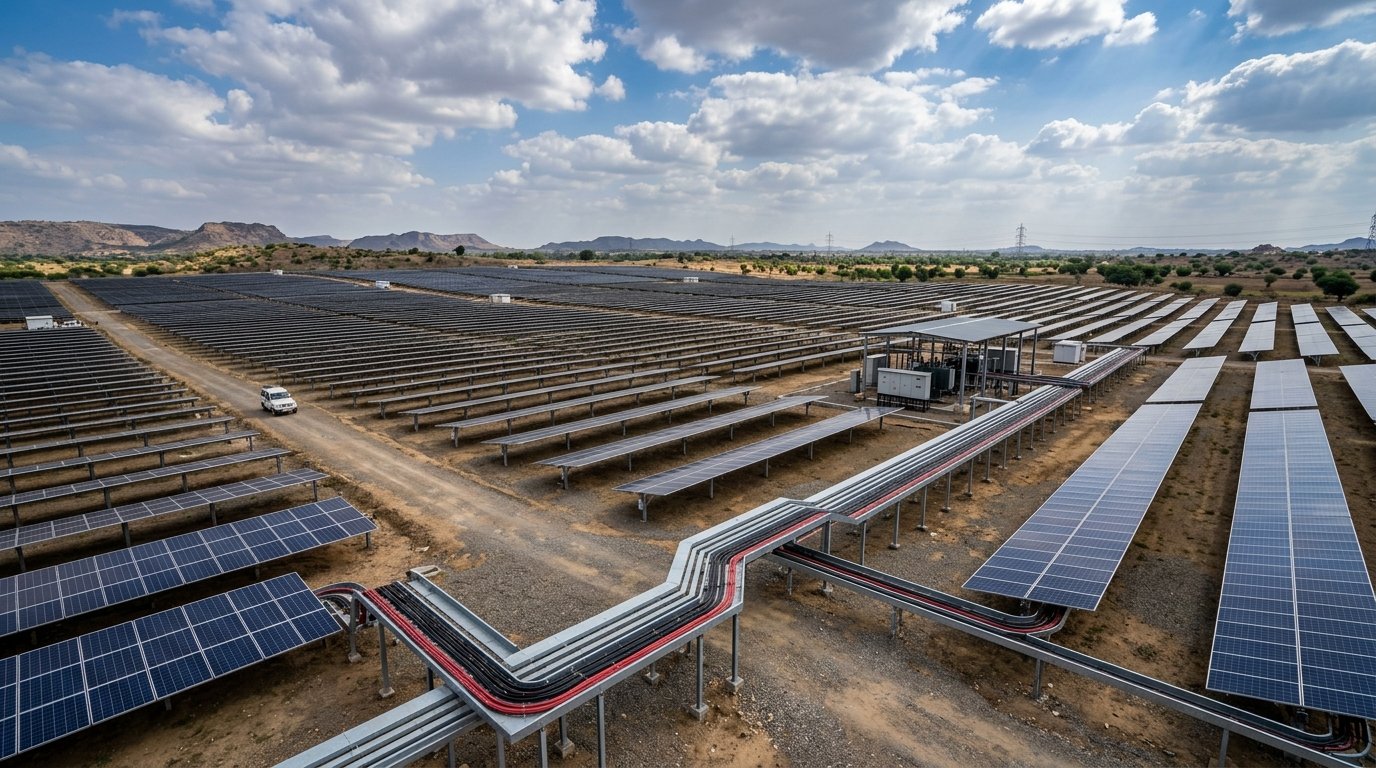
Primary Applications: Utility-scale solar parks, rooftop solar installations, solar agricultural pumping systems, and floating solar arrays.
Electrical cables are critical components of power and electrical systems, so quality and compliance should not be overlooked.
BIS maintains standards covering various cable categories. Buyers, contractors and project developers should check the applicable standard and product specification before procurement.
The Indian wire and cable industry is witnessing a structural transformation driven by four synchronized tailwinds:
Rajkot, Gujarat has earned national recognition as one of India's preeminent engineering and manufacturing hubs. Sourcing directly from an established integrated manufacturer eliminates multiple middlemen markups and ensures stringent quality control from rod breakdown to final spooling.
The right cable depends on voltage, current, conductor material, insulation, installation environment, temperature, mechanical conditions and applicable standards.
Quality cables can help improve electrical safety, reliability and long-term system performance while reducing the risk of premature failures and maintenance issues.
Solar photovoltaic installations have specific electrical and environmental requirements, so cables should be selected according to the application and applicable standards.
A reliable manufacturer can provide consistent product quality, appropriate specifications, technical support and products suitable for the intended electrical application.
Choosing the right electrical cable isn't a formality — it's a decision that affects safety, reliability and long-term cost, whether the project is industrial, commercial, infrastructure or renewable energy. From Medium Voltage Covered Conductors and LT Armoured Power Cables to Aerial Bunched Cables, Industrial Flexible Cables, Building Wires, Earthing Cables and Solar Cables, each category exists to solve a different problem.
As India's electrical infrastructure keeps expanding, the demand for cables built for specific applications — not generic ones — is only going to grow. With its manufacturing base in Rajkot, Gujarat and a portfolio built to match, Flashcab Cables Private Limited is positioned to serve industrial, commercial, infrastructure and renewable-energy projects across the board.
Before you commit to a product, run the numbers: required voltage, current, installation environment, construction, and the standards that apply to your project.