Hi, we use cookies!
Our website uses cookies to improve your experience. By continuing, we assume your permission to deploy cookies as detailed in our Cookie Policy.

.webp)
In some applications, medium voltage-covered conductor cables are superior to bare conductors due to several benefits. Here are a few main benefits:
Medium-voltage electricity is delivered from substations to residential, commercial, and industrial areas via overhead power distribution lines, which frequently use covered conductors.
By shielding the conductors from the elements, the insulation lowers the possibility of electrical failures brought on by exposure to pollutants, moisture, or other impurities.
Covered conductors can be used to increase the visual impact of power lines and reduce the possibility of unintentional contact with live parts in urban and suburban settings where aesthetics and safety are valued.
Over an extended period, bare conductor performance may deteriorate in environments with elevated pollution, moisture, or corrosive elements. The power distribution system's longevity is increased by covered conductors, which offer an extra degree of defense against these types of environmental stresses.
In places with a lot of vegetation, where there is a greater chance of branches or trees coming into contact with power lines, covered conductors are appropriate. The insulation lessens the possibility of faults and outages caused by vegetation.
Covered conductors offer an extra layer of defense against corrosion and environmental damage in coastal areas and other harsh environmental regions where exposure to salt, humidity, and extreme weather is a concern.
Given their greater exposure to inclement weather, covered conductors may be recommended in mountainous or high-altitude areas. The insulation aids in shielding the conductors from environmental hazards like snow and ice.
Industrial facilities may use medium voltage-covered conductors to distribute power from the main substation to different areas of the building. Harsh operating conditions and the presence of industrial chemicals are two things that the insulation helps shield against.
Covered conductors can be used for medium voltage interconnection within the power generation facility and for connecting the facility to the larger electrical grid in renewable energy projects, such as solar or wind farms.
In electrified railway systems, where trains are powered by medium voltage, covered conductors may be used. Insulation improves safety by reducing electrical interference.
Environmental Applications
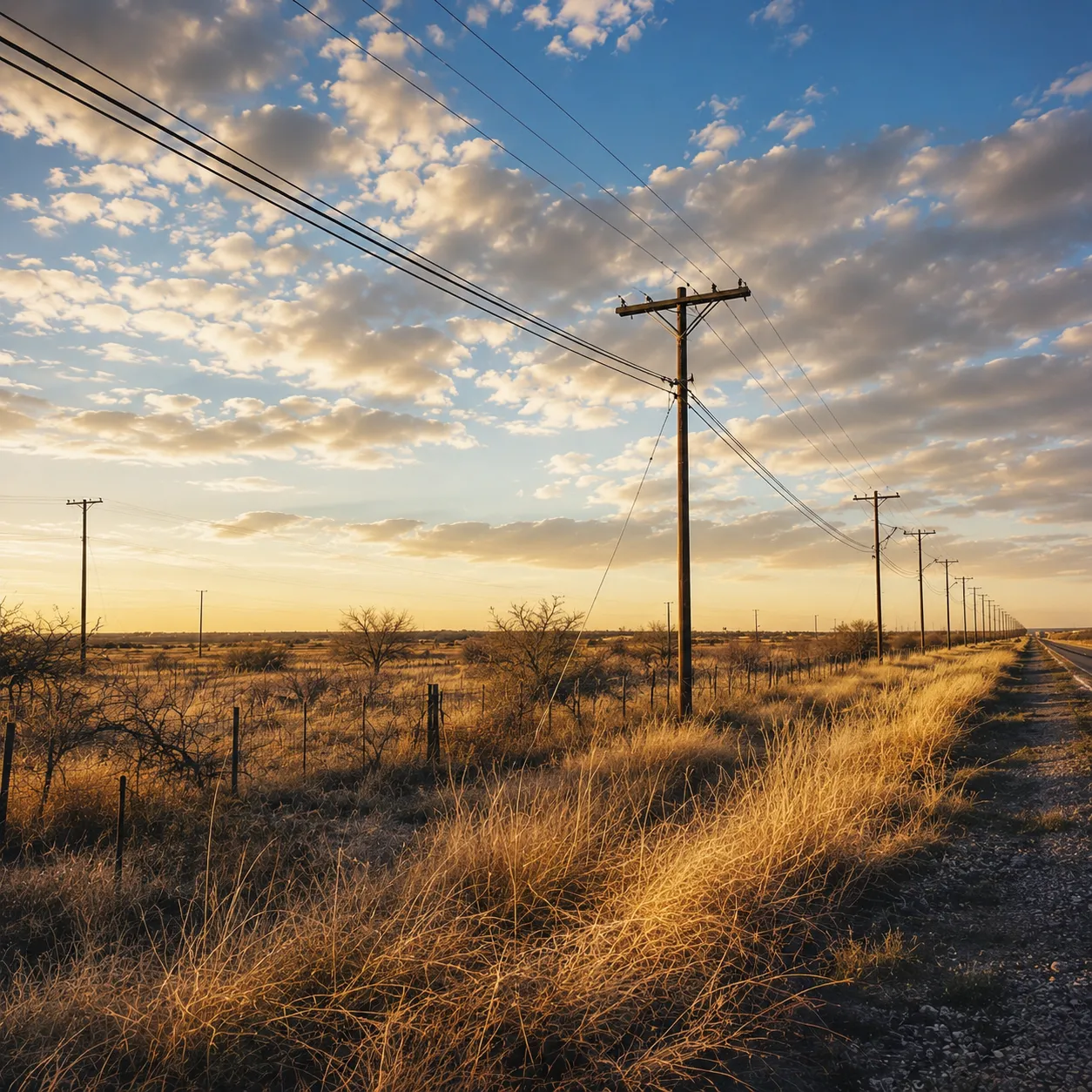
Hot Environments
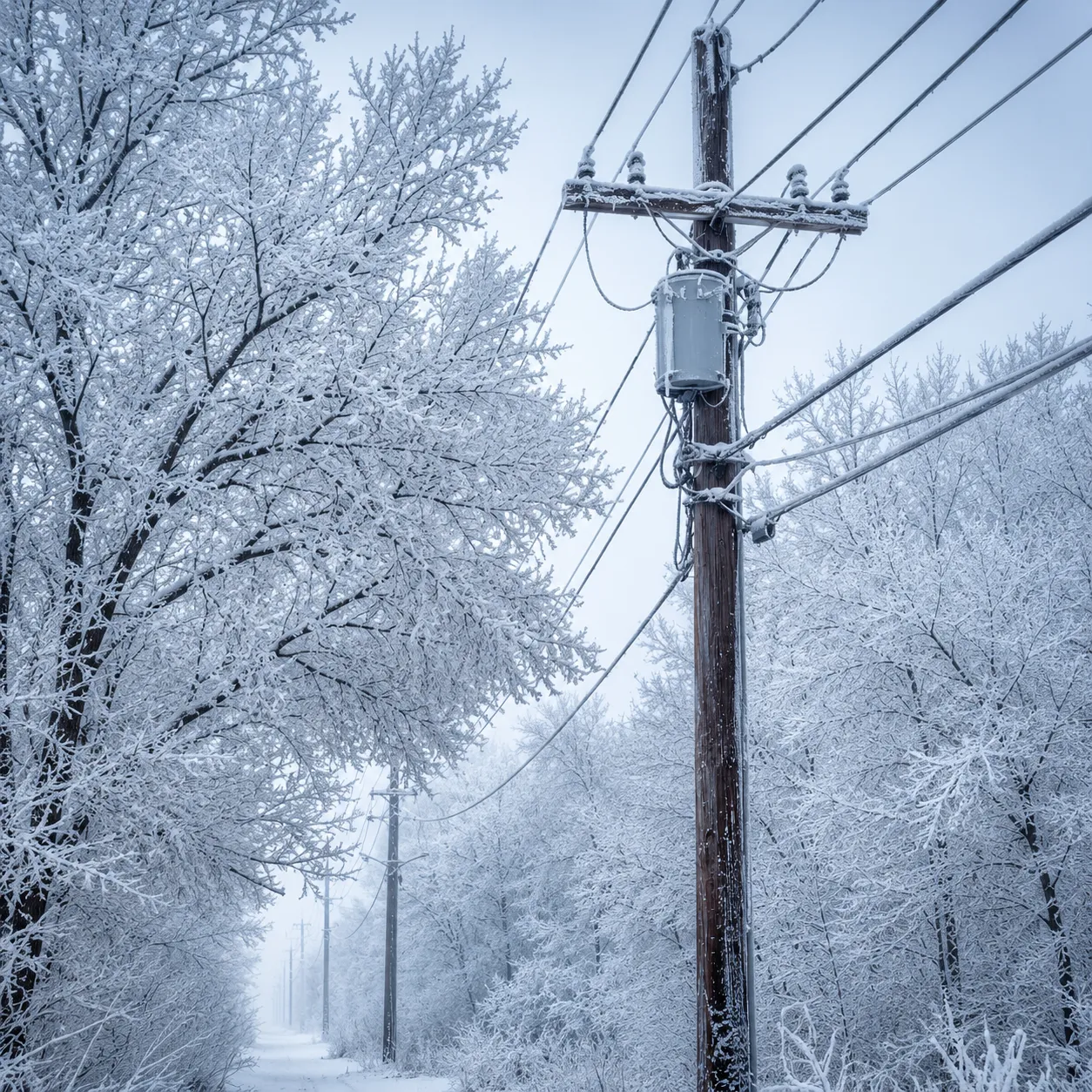
Cold Environments
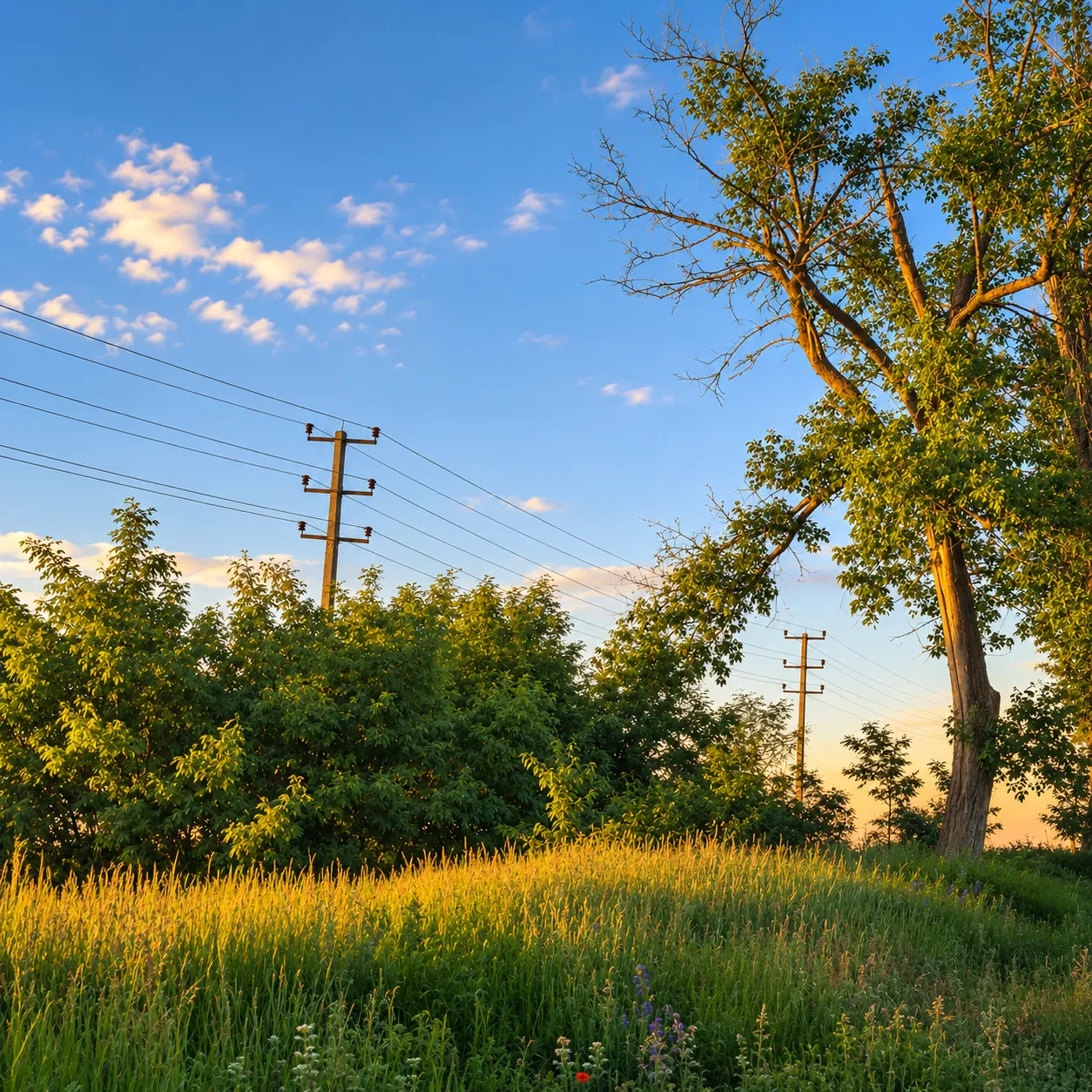
Forest Areas
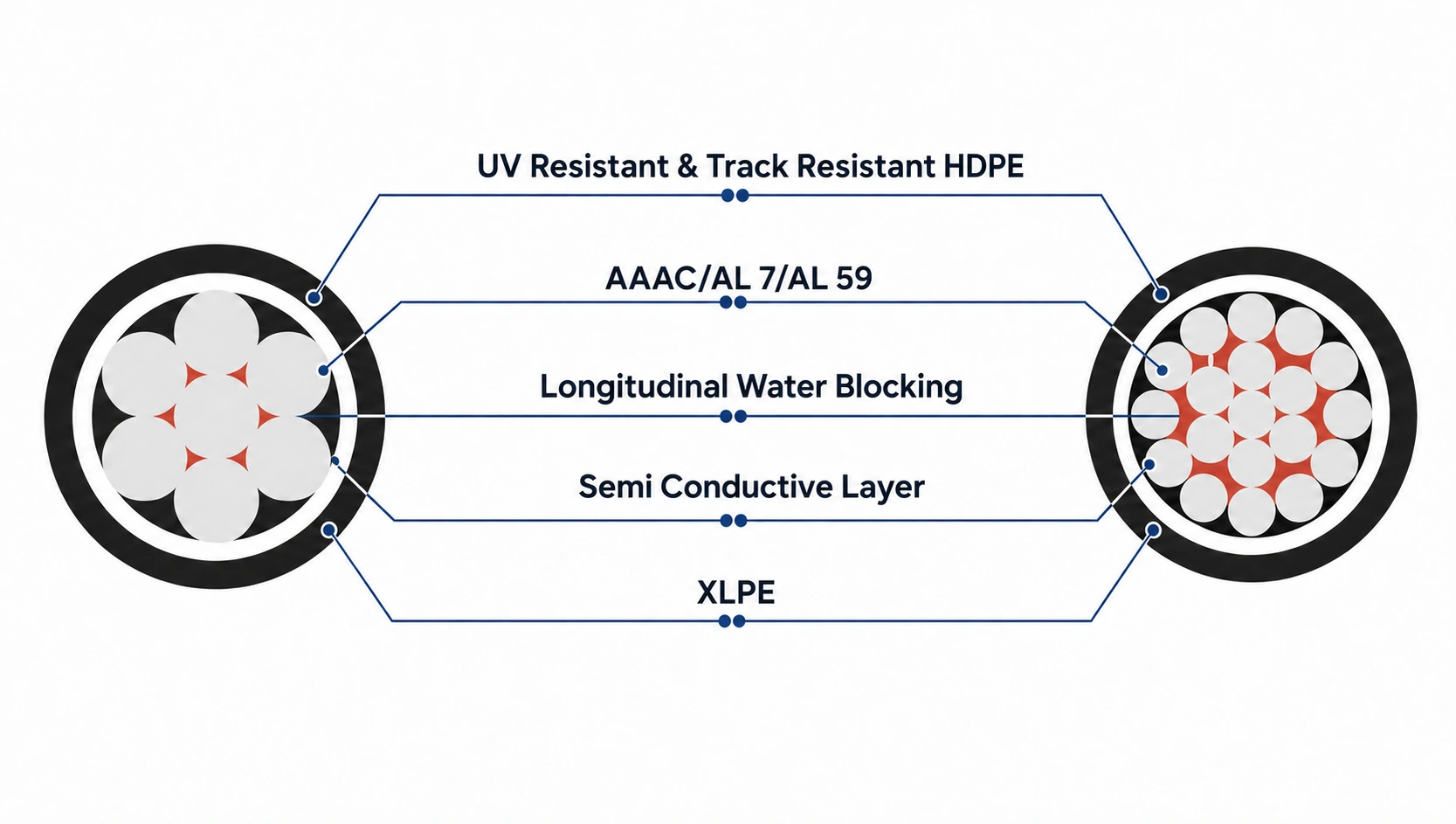
Cross Section & Construction Details
| Cross Section (Sq mm) | Construction | Type |
|---|---|---|
| 50 | 7 Strands | AAAC / AL-7 / AL -59 |
| 55 | 7 Strands | AAAC / AL-7 / AL -59 |
| 70 | 7 Strands | AAAC / AL-7 / AL -59 |
| 80 | 7 Strands | AAAC / AL-7 / AL -59 |
| 90 | 7 Strands | AAAC / AL-7 / AL -59 |
| 100 | 7 Strands | AAAC / AL-7 / AL -59 |
| 120 | 19 Strands | AAAC / AL-7 / AL -59 |
| 125 | 19 Strands | AAAC / AL-7 / AL -59 |
| 148 | 19 Strands | AAAC / AL-7 / AL -59 |
| 159 | 19 Strands | AAAC / AL-7 / AL -59 |
| 160 | 19 Strands | AAAC / AL-7 / AL -59 |
| 232 | 19 Strands | AAAC / AL-7 / AL -59 |
| 241 | 19 Strands | AAAC / AL-7 / AL -59 |
Cross Section & Construction (AL-59 ACS)
| Cross Section (Sq mm) | Construction | Type | |
|---|---|---|---|
| ACS | AL-59 | ||
| 31.6 | 1 Strands | 6 Strands | AL-59 ACS |
| 52.88 | 1 Strands | 6 Strands | AL-59 ACS |
| 78.82 | 1 Strands | 6 Strands | AL-59 ACS |
| 104.98 | 1 Strands | 6 Strands | AL-59 ACS |
| 120 | 7 Strands | 26 Strands | AL-59 ACS |
| 160 | 7 Strands | 30 Strands | AL-59 ACS |
| 241 | 7 Strands | 30 Strands | AL-59 ACS |
Cable Attributes & Nominal Thickness
| Sr.NO | Cable Attributes | UOM | Nominal Thickness | ||
|---|---|---|---|---|---|
| 11 KV | 22 KV | 33 KV | |||
| 1 | Aluminium Alloy Wire | Sq.mm | As Per Requirement | ||
| 2 | Extruded Longitudinal Water Blocking Layer | mm | As Required to make Water Blocked Arrangement | ||
| 3 | Extruded Semi Conductive Layer | mm | 0.3 | 0.3 | 0.4 |
| 4 | Inner Insulation of XLPE Without Carbon Black | mm | 1.2 | 1.32 | 2.43 |
| 5 | Outer Insulation with UV & Track Resistant HDPE | mm | 1.1 | 1.1 | 1.2 |